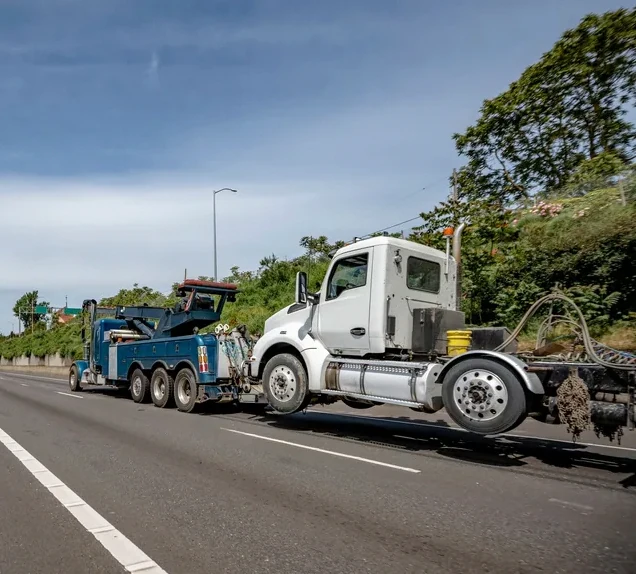
What is Heavy Duty Towing and how does it work?
Heavy duty towing uses specialized trucks and equipment to move large, disabled vehicles like dump trucks, buses, and construction equipment. For a Birmingham homeowner, it mostly comes into play when a contractor's rig breaks down on your property or a neighbor's semi blocks your driveway.
Heavy duty towing is not the same as the light duty tow truck that hauls away a broken-down sedan. The trucks used here are rated for 10 tons and up, with hydraulic systems, steel cables, and multiple axles to handle the weight. In Birmingham, you see them on I-65 or I-20 pulling wrecked tractor-trailers, but they also roll into neighborhoods when a concrete mixer gets stuck in a muddy lot or a dump truck drops a load of debris in your cul-de-sac.
The key difference is the equipment. A standard tow truck uses a wheel-lift or a flatbed. Heavy duty trucks use a combination of a boom, a winch, and a heavy-duty under-reach system. The boom lifts the front or rear of the vehicle off the ground, while the winch pulls it onto a trailer or a specialized carrier. Some jobs require a separate trailer rated for 40 tons or more.
For a homeowner, the most common heavy duty scenario is a contractor's vehicle breaking down during a project on your property. Say a concrete pump truck loses its hydraulics in your driveway. That is a heavy duty job. The tow company dispatches a truck with a 30-ton capacity, winches the pump onto a low-boy trailer, and hauls it to a repair shop. The whole process can take two to four hours.
Another scenario is a neighbor's semi-truck parked on the street that needs to be moved for a moving truck to get in. Or a construction dumpster that is too heavy for a standard flatbed. Heavy duty towing handles those loads safely without damaging your asphalt or concrete.
Birmingham's hilly terrain and narrow streets in older neighborhoods like Forest Park or Avondale add complexity. The tow truck driver has to position the rig carefully to avoid scraping curbs or hitting low-hanging branches. They often use spotters and extra wheel chocks to keep things stable on a slope.
How Heavy Duty Towing works, step by step
Heavy duty towing follows a careful process: assess the load, position the tow truck, secure the vehicle, winch it onto the trailer or lift, and transport it. Each step requires specialized equipment and trained operators to handle the weight safely.
First, the tow company dispatches a truck with the right capacity. For a 30-ton dump truck, they send a 40-ton rated rig, not a 10-ton one. The driver arrives, walks around the disabled vehicle, and checks for hazards like leaking fuel or broken air brakes. In Birmingham, summer heat can soften asphalt, so the driver lays down steel plates under the outriggers to prevent sinking.
Next, the driver positions the tow truck. For a front-end lift, they back the tow truck up to the front of the disabled vehicle. For a full trailer recovery, they park the trailer in line with the vehicle. On a narrow street like those in Five Points South, the driver may need to block traffic and use cones to create a safe work zone.
Then comes the rigging. The driver attaches chains or synthetic straps to the vehicle's frame, not the bumpers or axles. They use a recovery hitch if the vehicle is stuck in mud or a ditch. In Birmingham's red clay, a stuck concrete mixer might need a 50,000-pound winch to pull it free. The driver runs the cable through a snatch block to double the pulling power if needed.
With the vehicle secured, the driver uses the boom to lift the front or rear end. For a full trailer recovery, they winch the vehicle onto the trailer deck, chock the wheels, and tie it down with multiple chains and binders. Each chain is rated for the load and checked for tightness. The driver drives slowly, especially on Birmingham's hills like Red Mountain, to avoid shifting the load.
The whole operation can take two to four hours depending on the situation. A simple lift on a flat street might be under an hour. A recovery from a muddy construction site in a new subdivision like Liberty Park can take half a day. The driver communicates with the homeowner about access, timing, and any damage to the property.
- Assessment: check weight, hazards, and access.
- Positioning: align tow truck or trailer with the disabled vehicle.
- Rigging: attach chains to the frame, use snatch blocks if needed.
- Lift or winch: raise the vehicle or pull it onto the trailer.
- Securing: chock wheels, chain down, test tightness.
- Transport: drive slowly, avoid hills and tight turns.
Why Heavy Duty Towing matters for your home
Heavy duty towing matters because a contractor's breakdown on your property can halt a project, damage your driveway, or block access for emergency vehicles. Knowing how it works helps you choose the right service and avoid costly delays.
Imagine you are halfway through a basement excavation and the excavator's track motor fails. The machine sits in your backyard, blocking the crew from finishing. A standard tow truck cannot move a 20-ton excavator. You need a heavy duty tow truck with a low-boy trailer. Without it, your project stalls for days while the contractor finds a replacement machine.
Another example: a concrete pump truck breaks down in your driveway. The truck weighs 30 tons and is full of concrete. If the hydraulics fail, the boom is stuck in the air. A heavy duty tow truck can lift the boom, secure it, and haul the truck away. If you call a light duty tow company, they will show up, say they cannot handle it, and you lose time and money.
Heavy duty towing also protects your property. A properly equipped tow truck uses outrigger pads and steel plates to spread the weight. Without them, a 40-ton rig can crack your asphalt driveway or crush a concrete apron. In Birmingham's older neighborhoods with brick driveways, the driver needs to be extra careful to avoid breaking the bricks.
There is also the issue of liability. If a contractor's vehicle breaks down on your property and causes damage, the tow company's insurance covers it. But only if they are licensed and insured for heavy duty work. Hiring a company that specializes in heavy duty towing means they have the right coverage and equipment.
Finally, heavy duty towing keeps your neighborhood safe. A disabled semi-truck blocking a narrow street like 10th Avenue South can prevent fire trucks from getting through. A quick heavy duty tow clears the road. Birmingham's fire department relies on clear access, and a heavy duty tow company can respond within an hour to move a large vehicle.
Common problems and what causes them
Most problems with heavy duty towing on residential properties come from poor access, soft ground, overweight vehicles, and inexperienced operators. Understanding these issues helps you avoid them.
Access is the biggest headache. Birmingham's older neighborhoods have narrow streets, tight turns, and low-hanging trees. A 50-foot low-boy trailer needs a 60-foot turning radius. If your driveway is on a curve or has a gate, the tow truck may not fit. The driver may need to back in from the street, which takes time and blocks traffic.
Soft ground is another issue. After a rain, Birmingham's clay soil turns into a slick mess. A heavy tow truck can sink into the lawn, leaving deep ruts. The driver should lay down plywood or steel plates under the tires and outriggers. If they do not, you end up with a torn-up yard and a repair bill.
Overweight vehicles are common on construction sites. A contractor might overload a dump truck with wet dirt, pushing it past the legal weight limit. The tow truck operator has to check the weight before lifting. If the vehicle is too heavy for the tow truck's capacity, they have to call a larger rig. That adds hours and cost.
Inexperienced operators cause damage too. A driver who does not use outrigger pads can crack a concrete driveway. One who attaches chains to the wrong spot can bend a frame or break a brake line. Always ask the tow company if their drivers are certified for heavy duty recovery. In Birmingham, most reputable companies train their drivers through the Towing and Recovery Association of America.
Another common problem is the vehicle's brakes locking up. If a semi-truck has a brake failure, the wheels will not roll. The tow truck driver has to release the air brakes manually or use a dolly to lift the wheels. That adds complexity and time. The homeowner should expect the job to take longer if the vehicle has a mechanical issue beyond just being disabled.
Common questions about Heavy Duty Towing
Frequently Asked Questions
How much does heavy duty towing cost in Birmingham?
Costs vary widely based on the vehicle weight, distance, and complexity. A typical heavy duty tow can run from a few hundred to over a thousand dollars. The only way to get an exact figure is a free on-site quote from a local heavy duty towing company.
Can a standard tow truck move a dump truck?
No. Standard tow trucks are rated for vehicles under 10 tons. A dump truck often weighs 25 to 30 tons empty and more loaded. You need a heavy duty tow truck with at least a 40-ton capacity to move it safely.
Will heavy duty towing damage my driveway?
It can if the operator does not use proper equipment. A good heavy duty tow company uses steel plates and outrigger pads to spread the weight. On asphalt driveways, they should also avoid turning the wheels sharply while parked. Ask the company about their driveway protection practices before they arrive.
How long does a heavy duty tow take?
Most jobs take two to four hours from dispatch to drop-off. A simple lift on a flat street might be under an hour. A recovery from a muddy site or a tight neighborhood can take half a day. The driver can give you a better estimate after assessing the scene.
What if the disabled vehicle is in my backyard?
The tow truck needs a clear path to reach it. That may mean removing a fence gate or trimming branches. The driver will walk the route first and tell you what needs to be done. In some cases, they can use a winch and a snatch block to pull the vehicle out through a narrow opening.
Do I need to be home for the tow?
It helps. The driver needs someone to authorize the work and point out any property concerns like buried utility lines or sprinkler heads. If you cannot be there, you can leave written permission and a contact number. The driver will call you with updates.
What if the vehicle is leaking fuel or oil?
The tow company will handle it. They carry absorbent pads and spill kits to contain leaks before moving the vehicle. They also notify the Birmingham Fire Department if the spill is large. Do not try to clean it yourself.
Can heavy duty towing move a construction dumpster?
Yes, if the dumpster is too heavy for a standard flatbed. A heavy duty tow truck can lift a 10-yard dumpster full of concrete or dirt. The driver will need to check the weight first and use a roll-off trailer if the dumpster has wheels.
Is heavy duty towing available 24/7 in Birmingham?
Most heavy duty towing companies in Birmingham offer 24-hour service. They respond to accidents on interstates and emergencies in neighborhoods. Call ahead to confirm their hours and response time for your area.
What should I look for in a heavy duty towing company?
Look for a company with trucks rated for the weight of your vehicle, certified operators, and proper insurance. Ask if they use steel plates and outrigger pads. Read online reviews from other Birmingham homeowners. A local company knows the streets and the clay soil.
Need heavy duty towing in Birmingham? Get a free estimate today.
📞 256-669-8032