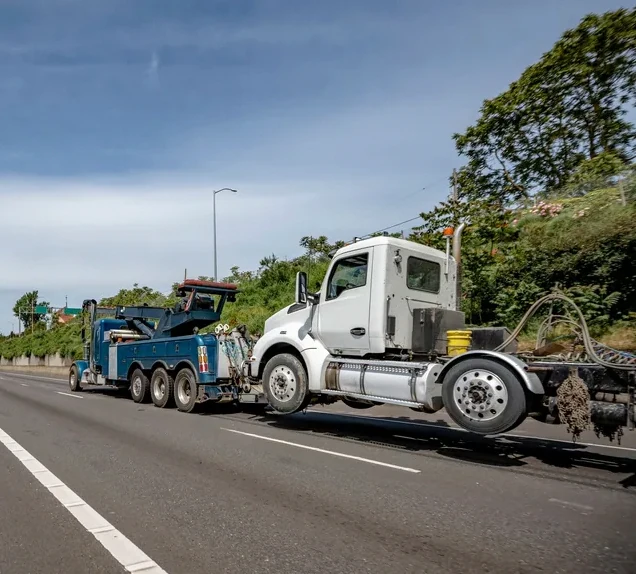
What is Emergency Towing and how does it work?
Emergency towing is when a heavy-duty tow truck comes to your home or a nearby road to move a disabled vehicle, usually a truck, RV, or equipment trailer, that can't be driven. The truck hooks up, lifts the vehicle, and hauls it to a shop or your driveway.
Think of it as roadside rescue for big vehicles. A standard passenger car tow truck won't cut it for a one-ton pickup hauling a skid steer or a 30-foot travel trailer. That's where heavy-duty towing comes in. In Birmingham, with all the construction traffic on I-65 and the hilly back roads near Liberty Park, breakdowns happen where a regular tow truck just can't handle the weight or the angle.
The process starts when you call a company like Birmingham Heavy Duty Towing. They ask for your location, what kind of vehicle you have, and what went wrong. Then they send a truck that can handle your vehicle's weight. Most heavy-duty tow trucks use a wheel-lift or a flatbed, not the old hook-and-chain setup. Wheel-lift cradles the tires, flatbed lets you drive or winch the whole vehicle onto a steel bed.
A common situation: your diesel truck's transmission fails on a steep driveway off Overton Road. A regular tow truck might not have the winch power to pull it up that grade. A heavy-duty wrecker can. The driver positions the truck, sets the wheel-lift or winch line, and pulls your vehicle out. Then they secure it with chains and straps and haul it to your mechanic or your house.
Emergency towing is not the same as a jump start or a tire change. It's for vehicles that cannot move under their own power and need a lift. If you're stuck in a ditch on a muddy job site near Bessemer, or your RV's brakes lock up on a steep hill in Vestavia, emergency towing is the service that gets you out.
The driver will also do a quick safety check before moving. They make sure the vehicle is secure, the lights are working on the tow truck, and the route is clear. On narrow Birmingham streets like those in Highland Park, they might need to block traffic briefly to maneuver. That's normal and legal with the right permits.
How Emergency Towing works, step by step
You call, give your location and vehicle details, a heavy-duty truck dispatches to you. The driver assesses the situation, secures the vehicle, and tows it where you need it. The whole thing usually takes 30 to 60 minutes from your call to hookup.
Step one is the phone call. When you call Birmingham Heavy Duty Towing, be ready to say exactly where you are. If you're on I-459 near the Galleria, give the mile marker. If you're on a residential street like Caldwell Road in Trussville, give the house number or nearest intersection. The more specific you are, the faster they get to you.
Step two is dispatch. The dispatcher looks at your vehicle's weight and where you are. A Class 8 tow truck might come if you're in a heavy-duty truck. A medium-duty wrecker might come for a one-ton dually. They send the right truck so you're not waiting for a second one. In Birmingham, traffic on 280 or I-20 can cause delays, but they route around it.
Step three is the driver arriving. They park the tow truck in a safe spot, put out warning triangles or cones if needed, and walk over to your vehicle. They ask what happened, check for visible damage, and decide how to hook up. If you're on a shoulder with soft ground, they might use a winch from the road. If you're in a parking lot, they drive right up.
Step four is the hookup. The driver lowers the wheel-lift or flatbed, positions it under your vehicle, and winches or drives it on. They chock the wheels, attach safety chains, and strap down the vehicle. For a heavy load like a loaded dump truck, they use multiple chains and binders. This takes about 10 to 15 minutes.
Step five is the tow. The driver pulls onto the road and heads to your chosen destination. They drive at a safe speed, usually under 55 mph, and take turns wide to avoid swinging the load. If you're going to a shop on Valley Avenue or a storage lot off Lakeshore Parkway, they drop it exactly where you say. They unhook, you sign the paperwork, and you're done.
One thing homeowners often get wrong: they think the tow truck can just yank the vehicle out of a ditch or off a curb. That's not how it works. The driver has to set up properly to avoid damaging your vehicle's frame, suspension, or drivetrain. Patience during setup saves you money on repairs later.
Why Emergency Towing matters for your home
If you own a heavy truck, RV, or equipment for your property, a breakdown near your home can block your driveway, leave you stranded, or cause damage to your yard. Emergency towing gets it out safely without tearing up your land or your vehicle.
Your home is your base. If your work truck breaks down in your driveway, you can't get to work. If your RV's engine dies on the steep hill leading to your house in Bluff Park, you can't park it. Emergency towing clears that problem fast. The tow truck can pull a dead vehicle out of a tight spot without scraping your pavement or digging ruts in your lawn.
Birmingham has a lot of older neighborhoods with narrow streets and tight driveways. Places like Crestline Park or Forest Park have limited room. A heavy-duty tow truck driver knows how to maneuver a big rig in those spaces. They can back into a driveway that barely fits a car and pull out a 40-foot motorhome without hitting a mailbox or a fence.
Another reason it matters: property damage. If your vehicle has a brake failure and rolls into a ditch, trying to move it yourself with a pickup and a chain can wreck your vehicle's frame or damage your yard. A professional tow truck uses a winch with controlled tension. They lift the vehicle, not drag it. That saves your grass, your driveway, and your vehicle's undercarriage.
If you store equipment on your property, like a tractor, a skid steer, or a trailer, emergency towing can move it if it breaks down. You don't want a broken-down excavator sitting in your backyard for weeks while you wait for a repair shop to come to you. A tow truck can haul it to a shop in Irondale or Homewood and get it fixed faster.
For homeowners with a home-based business that uses heavy vehicles, like a landscaping company or a mobile mechanic, a breakdown can shut down your income. Emergency towing gets you back on the road the same day. You don't lose a week of work waiting for a friend with a trailer.
Common problems and what causes them
Most emergency towing calls in Birmingham come from mechanical failures, accidents, or getting stuck. The specific causes vary by vehicle type, but the patterns are consistent: transmission problems, flat tires on heavy loads, and drivers misjudging clearance or traction.
Transmission failure is the number one reason heavy trucks need emergency towing. A diesel truck pulling a trailer up Montevallo Road can overheat the transmission on a hot July afternoon. The truck loses power, you pull over, and it won't go back into gear. That's a tow call. The transmission is too big for a regular mechanic to fix on the roadside, so it has to go to a shop.
Flat tires on a heavy vehicle are another big one. A blowout on a dual-wheel truck on I-65 near the Arkadelphia Road exit can shred a tire and damage the wheel well. You can't change a tire on a loaded dump truck with a regular jack. The tow truck comes, lifts the vehicle, and either changes the tire on the spot or tows it to a tire shop.
Getting stuck happens more than you'd think. A homeowner driving a motorhome into their backyard to park it might sink into soft ground after a rain. Birmingham clay holds water, and a 10,000-pound RV can sink axle-deep. A heavy-duty wrecker with a winch can pull it out without tearing up the lawn. Same for a truck stuck in a muddy construction site near the new developments in McCalla.
Brake failures are scary but common on steep Birmingham hills. A truck coming down Shades Crest Road with a heavy load can overheat the brakes and lose stopping power. The driver has to pull off safely and call for a tow. The tow truck can winch the vehicle onto a flatbed and take it to a brake shop without the driver risking a runaway.
Accidents happen, too. A deer strike on Highway 280 near the zoo can disable a truck's radiator. A fender bender in a parking lot on 31 can bend a tie rod. In those cases, the vehicle is not drivable and needs a tow. The driver will work with your insurance if needed, but the tow itself is the same process: hook, secure, haul.
What most homeowners get wrong is thinking they can handle these situations themselves. A friend with a chain and a pickup can cause serious damage to both vehicles. The right way is to call a professional heavy-duty tow truck that has the equipment and the training to do it safely.
Common questions about Emergency Towing
Need heavy duty towing in Birmingham? Get a free estimate today.
📞 256-669-8032